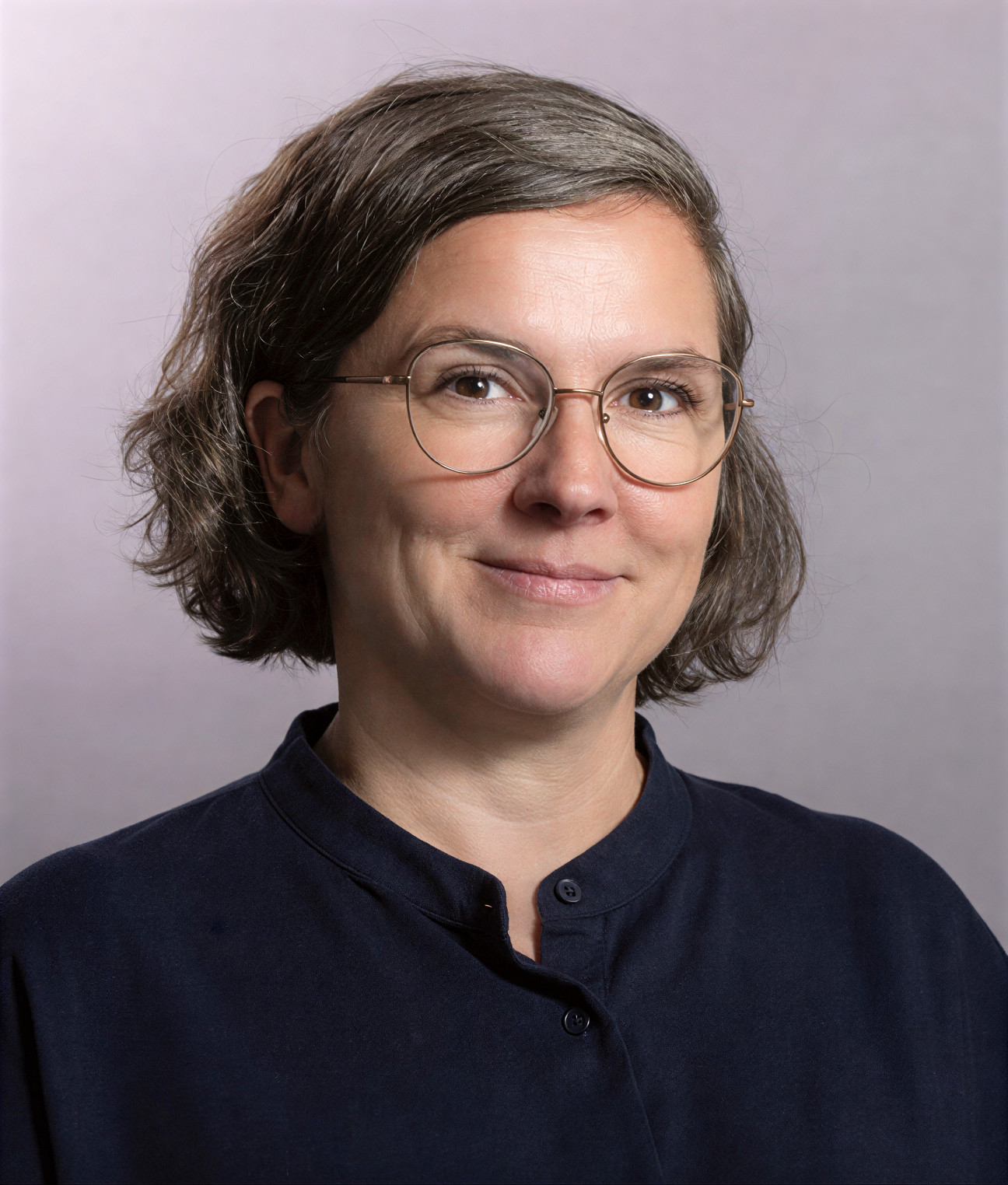
Dr. Britta Schneider is Professor of Applied Linguistics of Contemporary English at the University of Vienna, Austria. Her research focuses on the intersections of language, society, and technology, with particular attention to how languages are discursively and materially constructed in digital and AI-mediated contexts. She investigates multilingualism and linguistic diversity in digital cultures, the social and cultural framing of AI as a communicative infrastructure, and posthumanist approaches to language and knowledge.
Dr. Schneider received her PhD from Goethe Universität Frankfurt am Main, Germany, and Macquarie University, Sydney, Australia. She also chaired the working group “Ideologies, Beliefs, Attitudes” for the COST Network Language in the Human-Machine Era (2020–2024).
Her recent publications reflect her focus on AI, digitalization, and posthumanist sociolinguistics. Key works include Liquid Languages: Constructing Language in Late Modern Cultures of Diffusion (Cambridge University Press, forthcoming 2024), Posthumanist Sociolinguistics (Signs and Society, 2024, with Theresa Heyd), and Multilingualism and AI – The Regimentation of Language in the Age of Digital Capitalism (Signs and Society, 2022). She also co-edited a special issue, AI Technology as Human Interaction: Linguistic and Cultural Framings of AI as Communicative Infrastructure (AI & Society, forthcoming 2025), and has multiple forthcoming contributions on AI language culture, large language models, and digital discourse in leading handbooks and journals.
Dr. Schneider has presented her work on AI and language technology at major international keynotes, including “Linguistic Governmentality and Media Technologies: How is Language Ordered in the Age of Large Language Models?” (University of Hamburg, 2023), “Was ist Sprache und was bedeuten KI-Sprachmodelle für unsere Sprachkultur?” (University of Bern, 2023), and “Language Technology as Cultural Practice: Western Biases in Computational Language Discourse” (Contacts & Contrasts Conference, Konin, Poland, 2023).
Her research interests span the construction of languages, transnational communities, language ideologies, language and digital technology, posthumanist sociolinguistics, and the social and cultural implications of AI-mediated communication.