CASC investigates the hidden mechanisms through which AI reshapes social reality, culture, and human experience. Our interdisciplinary research explores the social, psychological, ethical, and cultural dimensions of AI. Key themes include:
AI, Loneliness, and Social Relationality — Effects of algorithmic interaction, platform isolation, and substitution of human connection with machine responsiveness.

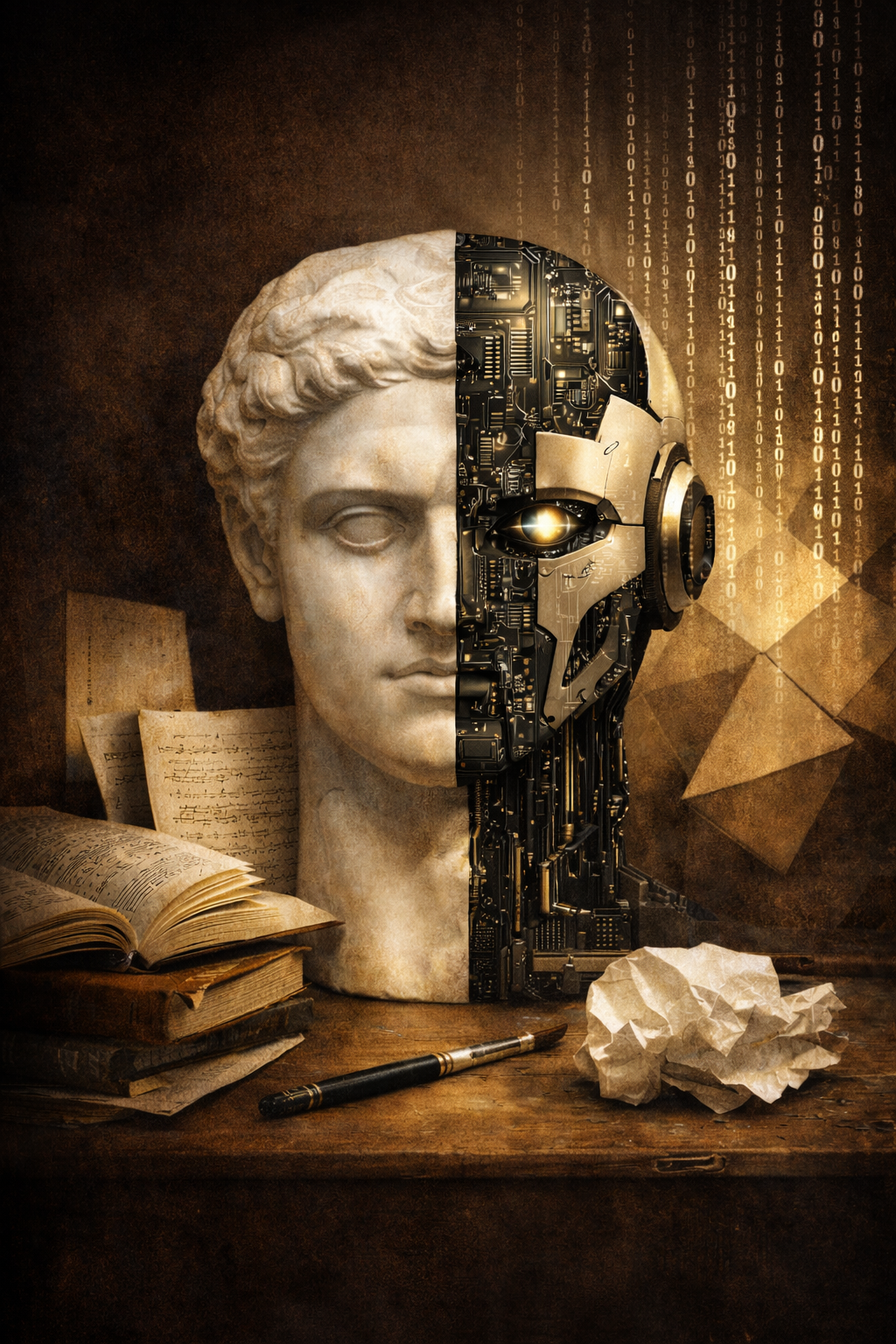
The Work of Art in the Age of Artificial Intelligence
Researcher: Howard Eiland
What might the writer of the well-known essay of the 1930s, “The Work of Art in the Age of Its Technological Reproducibility,” have to teach us about the apparatus of artificial intelligence today? Would Walter Benjamin, with his punctuated associative way of thinking, look upon AI as blurring the line between tool and collaborator, as a kind of constructive construct or, perhaps, a fruitful soil requiring stewardship? What happens to aura, to authorship, to reproducibility when the production of texts is radically democratized and automated, as we see happening at present? The Artwork essay highlights the new field of action and space for play, the Spielraum, opened up by the cinema’s documentation and exploration of commonplace milieux. Can we likewise speak of a new generative interactive Spielraum opened up by our prompts to AI? What would Benjamin think of the welcoming, almost companionable chatbot voice and the prospect of machine consciousness or machine experience? Perhaps recalling the corporate powers behind the maturing film industry that he celebrated in the […]

Researcher: Geoff M. Boucher
Critical Theory and Artificial Intelligence is an ongoing research project that aims to provide a resource for Critical Theory researchers working on problems related to artificial intelligence, with particular focus on the application of current models to workplace situations.

Researcher: Mary Caputi
Artificial Intelligence as Oxymoron is an ongoing research project that critically interrogates the concept of artificial intelligence through the theoretical frameworks of Frankfurt School Critical Theory. Drawing primarily on the work of Herbert Marcuse and Theodor W. Adorno, the project argues that, from a dialectical and socially mediated perspective, the dominant contemporary understanding of “artificial intelligence” rests on a categorical mistake. Specifically, it contends that intelligence—properly understood within Critical Theory—cannot be reduced to information processing, data optimization, or computational problem-solving, and that the term “artificial intelligence” is therefore, in a strong sense, an oxymoron.
The project proceeds from the premise that Critical Theory defines intelligence not as the accumulation or manipulation of facts, but as a historically mediated, socially situated, and open-ended mode of cognition. By contrast, contemporary AI systems operationalize intelligence as quantifiable information, thereby collapsing the distinction between thought and data, judgment […]