Where AI Meets Collective Thinking

People

Director

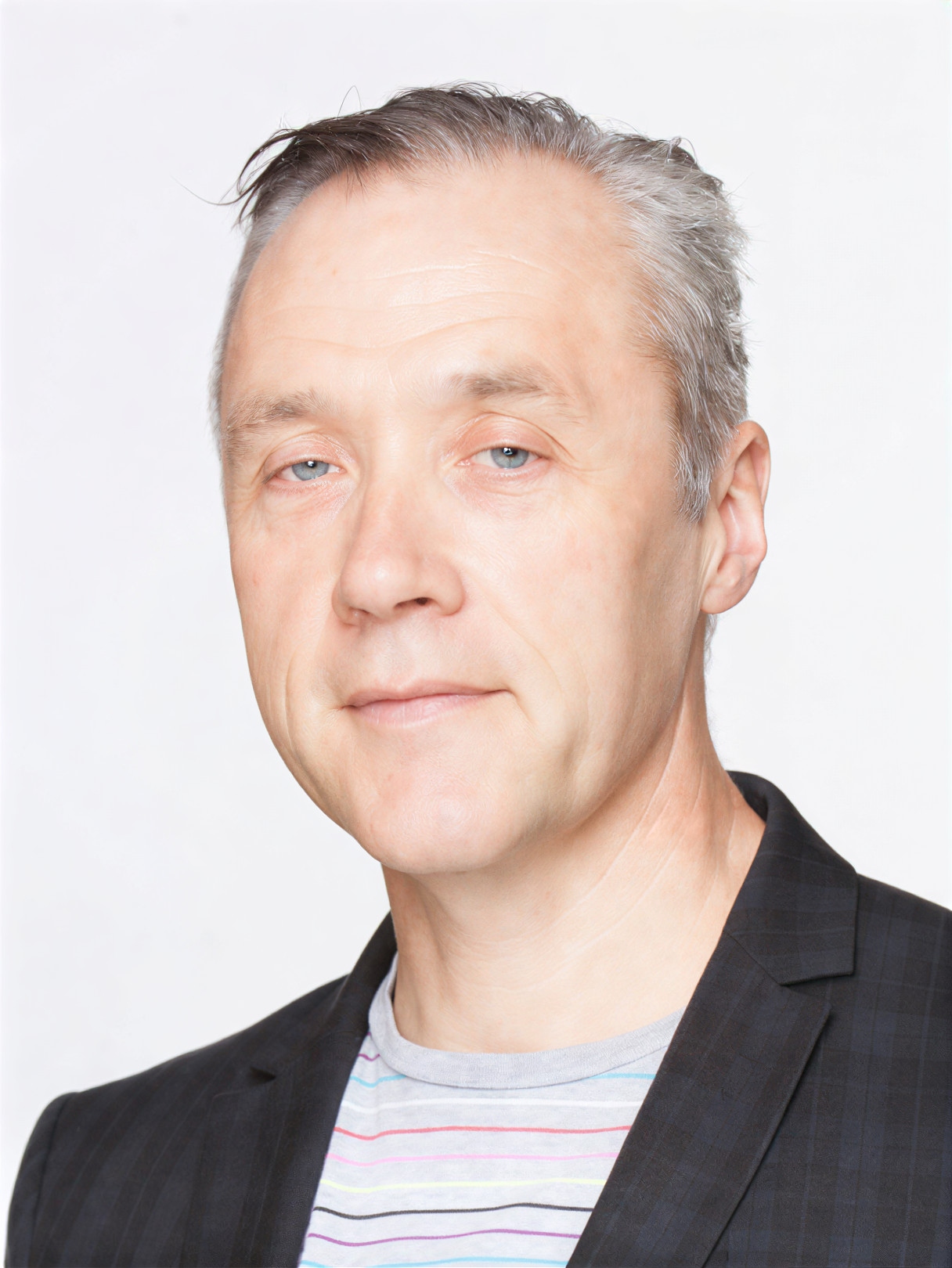
Dr. Amirhosein Khandizaji

Dr. Amirhosein Khandizaji is a sociologist and critical theorist whose work focuses on the tradition of the Frankfurt School, with particular attention to domination, instrumental rationality, the culture industry, and the social and psychological consequences of modern technologies. He holds a PhD in Sociology from the Free University of Berlin, Germany. He is the author of The Victory of Instrumental Reason and Farewell to Variety (Xenomoi, 2013) and Baudrillard and the Culture Industry (Springer, 2017), and the editor of Reading Adorno: The Endless Road (Palgrave, 2019). He is also the co-author of David Riesman and Critical Theory (Palgrave, 2021), and the co-editor of Adorno’s Shadow: A Lasting Legacy (Xenomoi, 2025), Critical Theory: The Last Stand for Emancipation (Xenomoi, 2025)

Communications & Publishing Manager

Wolfgang Sohst

Wolfgang Sohst oversees CASC’s communications and publishing activities, including editorial coordination and the dissemination of research outputs. He brings extensive experience in academic publishing in philosophy and the social sciences. He studied law at the Free University of Berlin and worked as a legal advisor in various companies before becoming an independent management consultant. He is the founder of xenomoi Verlag, an academic publishing house based in Berlin, and has published several [...]

Senior Research Fellows (Alphabetical)

Olivier Alexandre

Olivier Alexandre is a Research Fellow at the French National Center for Scientific Research (CNRS), Associate Professor at Sciences Po, and Deputy Director of the French Internet and Society Center. His research focuses on technology, culture, and politics. He co-leads two research groups within the GDR Internet, AI and Society: one on “Digital Capitalism and Its Ideologies” (with Benjamin Loveluck) and another on “Criticizing AI: AI Through Its [...]

Mark Andrejevic

Mark Andrejevic is Professor in the School of Media, Film and Journalism at Monash University where he specializes in critical theoretical approaches to the media. His recent work focuses on the political and cultural implications of automation in the online surveillance economy. His work is influenced by continental theory and political economy with a particular emphasis on the Frankfurt School and the critical psychoanalytic theory of the Slovenian school. He is the author [...]

Marco Bastos

Marco Bastos is the University College Dublin Ad Astra Fellow at the School of Information and Communication Studies and Senior Lecturer in the School of Communication & Creativity of City, St George’s, University of London. His research leverages computational methods, network science, and large language model data to explore the intersection of communication and computational social science. Dr. Bastos is the lead investigator in the Twitter-funded project investigating echo [...]

Jonathan Beller

Jonathan Beller is Professor of Humanities and Media Studies and co-founder of the Graduate Program in Media Studies at Pratt Institute. He is also Distinguished Visiting Professor of English and of Women’s, Gender, and Sexuality Studies at Barnard College, Columbia University. Recently, he held the titles of Visiting Professor at REMESO / Institute for Research on Migration, Ethnicity, and Society, Linköping University, Sweden, and Visiting Researcher at the University [...]

Dr. Geoff M. Boucher

Dr. Geoff M. Boucher is Associate Professor in Literary Studies at Deakin University. He currently researches the authoritarian personality from the perspective of critical theory and is an expert on Frankfurt School critical theory, Marxism, and psychoanalysis, as well as the work of Žižek and Lacan. He is the author of Traversing the Fantasy: Critical Essays on Slavoj Žižek (co-editor, 2005), The Charmed Circle of Ideology (Melbourne: Re-Press, 2008), The Times Will Suit Them: Postmodern Conservatism in Australia (with Matthew Sharpe) (Sydney: Allen & Unwin, 2008), Žižek and Politics: A Critical Introduction

Benedetta Brevini

Benedetta Brevini is Associate Professor of Political Economy of Communication at the University of Sydney and Visiting Professor at the Institute for Public Knowledge, New York University (through 2025). She is also a Senior Visiting Fellow at the London School of Economics and Political Science. Her research is grounded in critical political economy and focuses on the intersections of communication, data capitalism, artificial intelligence, and the climate crisis, with [...]

Mary Caputi

Mary Caputi is Professor Emerita of Political Theory at California State University, Long Beach, where she taught political theory, feminist thought, and critical thinking for thirty years. Her scholarship spans feminist political theory, critical theory, American culture, and the politics of power and resistance. Her most recent publication is the Research Handbook on Feminist Political Thought (Edward Elgar, 2024), co-edited with Patricia Moynagh. She is the author of Slow Culture and the American Dream: A Slow and Curvy Philosophy for the 21st Century (Lexington Books, 2022), Feminism and Power:

Dr. Mark Carrigan

Dr. Mark Carrigan FRSA FHEA is Senior Lecturer in Education at the University of Manchester, where he co-leads the Digital Education Manchester group and serves as an AI Fellow at the Institute for Teaching and Learning. His work centers on three interconnected commitments: developing ontological and epistemological frameworks for understanding Large Language Models (LLMs) beyond current inadequate conceptualizations; examining higher education as a critical site where the social and cultural dynamics of LLMs unfold through practical challenges; and advancing Margaret Archer’s morphogenetic approach as a route to addressing these urgent questions. Originally trained as a philosopher and sociologist, his work draws on a range of intellectual sources, including philosophical anthropology, digital sociology, platform studies, and psychoanalysis. He is currently training as a group analyst and is particularly interested in questions of reliance, dependence, and addiction in relation to everyday use of social platforms and LLMs, especially among young men. His long-term theoretical project seeks to incorporate elements of Lacanian psychoanalysis into Archerian realism.

Richard Cavell

Richard Cavell is Founding Professor of Media Studies at the University of British Columbia (Vancouver Canada). Mentored by Marshall McLuhan at the University of Toronto, Prof. Cavell went on to found the Bachelor of Media Studies Program at UBC. Author of a dozen books, he has published most recently The Explorations of Edmund Snow Carpenter, which received the McLuhan Award from the Media Ecology Association, and Honorable Mention for the Book Prize in Museum Anthropology from the American Anthropological Association.

Paul Cobley

Paul Cobley is Emeritus Professor in Language and Media at Middlesex University. He has published over a hundred articles, several monographs, and edited dozens of collected volumes. His research focuses on semiotics and narratology, as well as on integrating different schools and fields within the discipline of semiotics. Cobley has been dedicated to creating publishing opportunities for semiotic research, editing some of the most influential journals in the field and leading [...]

Mark Coeckelbergh

Mark Coeckelbergh is Professor of Philosophy of Media and Technology at the University of Vienna and ERA Chair at the Institute of Philosophy of the Czech Academy of Sciences in Prague. He is the author of numerous publications, including Introduction to the Ethics of Emerging Technologies (with Wessel Reijers and Mark Thomas Young, Palgrave Macmillan, 2025); Communicative AI (with David Gunkel, Polity, 2025); Why AI Undermines Democracy and What to Do About [...]

Harry F. Dahms

Harry F. Dahms is Professor of Sociology and co-chair of the Committee on Social Theory at the University of Tennessee, Knoxville (UTK). He directs the Center for Social Theory and serves as a member of the AI TENNessee Initiative and the Center for the Dynamics of Social Complexity (DySoc). In addition, he is core faculty in Cinema Studies at UTK and editor of Current Perspectives in Social Theory. Dahms’ research and teaching span theoretical sociology, critical and social theory, planetary [...]

James E. Dobson

James E. Dobson is Associate Professor of English and Creative Writing at Dartmouth College, where he has been teaching in the humanities since 2012 and researching computational methods since 2003. His interests and publications span a wide range of topics, from accessing computational and data resources on large, distributed computing networks to autobiographical self-representation in American literature. Most recently, he has focused on computer vision, computational [...]

Maria Giulia Dondero

Maria Giulia Dondero, PhD, is Research Director at the Belgian National Fund for Scientific Research (F.R.S.-FNRS) and Professor at the University of Liège. Her main research fields include the relationship between semiotics and art history; theories of photography and multimodal translation; diagrams in scientific discourse; and generative AI. She is President of the International Association for Visual Semiotics (IAVS/AISV) and Delegate for International Affairs of the French [...]

Autumn Edwards

Autumn Edwards is Professor of Communication at Western Michigan University, where she co-directs the Communication & Social Robotics Labs (combotlabs.org). She is a Theodore von Kármán Fellow at RWTH Aachen University and a University Distinguished Teacher at Western Michigan University, the institution’s highest award for instructional excellence. Edwards is the founding Editor-in-Chief of the journal Human-Machine Communication and a key figure in the development of [...]

Dino Franco Felluga

Dino Franco Felluga is Professor of English at Purdue University. He has spent his career building large collaborative resources and organizations, including the North American Victorian Studies Association (NAVSA), Britain Representation and Nineteenth-Century History (BRANCH), and the Collaborative Organization for Virtual Education (COVE). His 2024 open-access Oxford UP book, Novel-Poetry: The Shape of the Real and the Problem of Form, co-written with Emily Allen, explores alternative ways for [...]

Stella Gaon

Stella Gaon is Professor of political theory in the Department of Political Science and Global Development Studies, and Adjunct Faculty in the Department of Women and Gender Studies, at Saint Mary’s University in Halifax, N.S., Canada. Gaon is the editor of Democracy in Crisis: Violence, Alterity, Community (Manchester UP) and the author of The Lucid Vigil: Deconstruction, Desire, and the Politics of Critique (Routledge), which was awarded the 2020 Book Prize of Symposium: Canadian Journal for Continental Philosophy.

Gary Genosko

Gary Genosko is a Full Professor and internationally recognised scholar of communication and cultural theory, with expertise in Continental philosophy, technoculture, and critical semiotics. From 2002 to 2012, he held a Canada Research Chair in Technoculture Studies, strengthening his international reputation for research on media, technology, and cultural transformation. He is a leading authority on the work of Jean Baudrillard and Félix Guattari and has played a pivotal role in introducing [...]

David J. Gunkel

David J. Gunkel (PhD Philosophy) is an award-winning educator, researcher, and author, specializing in the philosophy of technology with a focus on the moral and legal challenges of artificial intelligence and robots. He is the author of over 115 scholarly articles and has published eighteen books, including The Machine Question: Critical Perspectives on AI, Robots, and Ethics (MIT Press 2012), Robot Rights (MIT Press 2018), and Person, Thing, Robot: A Moral and Legal Ontology [...]

David Hesmondhalgh

David Hesmondhalgh is a Professor of Media, Music and Culture at the University of Leeds, where he has been based since 2007. From 2010 to 2013, he served as Head of the Institute of Communications Studies (now the School of Media and Communication). Professor Hesmondhalgh is an internationally recognised scholar of media, culture, and the creative industries. He is the author and editor of numerous books and journal articles on media industries, cultural production, music, and social [...]

Robert E. Kirsch

Robert E. Kirsch is an interdisciplinary political theorist whose research focuses on extreme organizational change. His work addresses macro-level issues such as “doomsday prepping” movements in the United States, energy production, climate change denialism, and heterodox political economies of public finance, as well as smaller-scale questions regarding the uses and abuses of leadership development in pursuing organizational change. He draws on both [...]

Gray Kochhar-Lindgren

Gray Kochhar-Lindgren is the 2025–26 Eminent Scholar in the Humanities Chair and Professor of Philosophy at the University of Alabama–Huntsville and has recently been invited to serve as one of the inaugural Senior Research Fellows at the Center for AI, Society, and Critique in Berlin. Since 2023, he has served as Honorary Professor of Humanities at the University of Hong Kong, where he teaches in Comparative Literature’s MALCS program, and, from 2014–22, Gray was [...]

Hans-Herbert Kögler

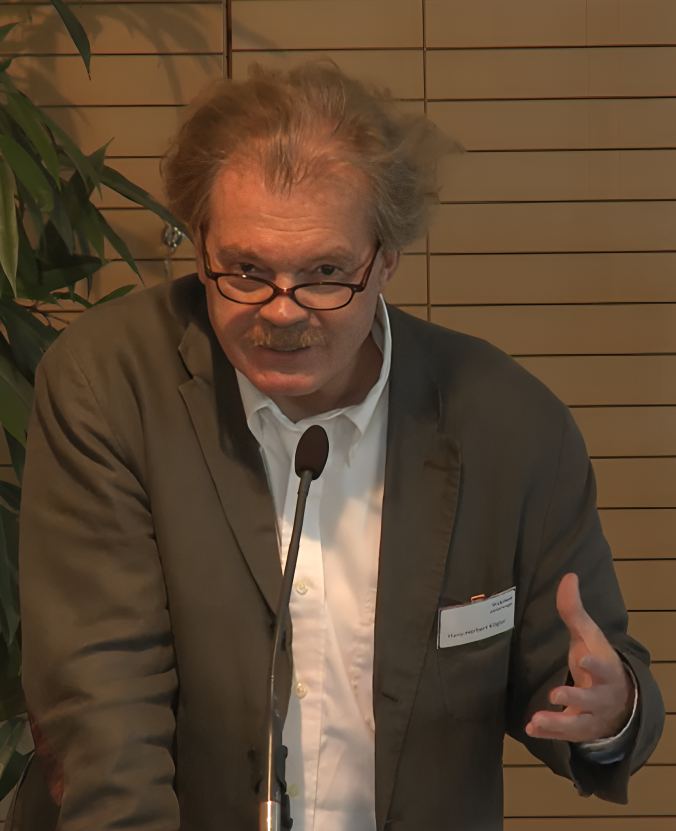
Hans-Herbert Kögler is Professor of Philosophy at the University of North Florida, Jacksonville and regular visiting professor at the Alpen-Adria University Klagenfurt, Austria. Dr. Phil. Goethe -University of Frankfurt, graduate work at Northwestern, New School, Berkeley. Former Department Chair and coordinator of Graduate Program. Major publications include The Power of Dialogue: Critical Hermeneutics after Gadamer and Foucault (MIT 1999/in German Metzler 1992/2016); Michel Foucault (Metzler 2004/2018); Kultura, kritika, dialogue (Prague Academy 2006); Empathy and Agency:

Nikolas Kompridis

Nikolas Kompridis is the author of Critique and Disclosure: Critical Theory between Past and Future (MIT), Philosophical Romanticism (Routledge), the Aesthetic Turn in Political Thought (Bloomsbury), and Cinematic Heterotopias: Fugitive Spaces of Refuge and Freedom (Routledge, forthcoming). He has also published more than 60 referred articles on a wide range of topics in philosophy, political theory, and aesthetics, and is currently working on a new book proposing [...]

Claudia Leeb

Claudia Leeb is an Associate Professor in political theory at Washington State University. She works at the intersection of early Frankfurt school critical theory, feminist theory, and psychoanalysis to address questions of power and rebellion. She is the author of Contesting the Far Right: A Psychoanalytic and Feminist Critical Theory Approach(2024, Columbia University Press, New Directions in Critical Theory Series); The Politics of Repressed Guilt: The Tragedy of Austrian Silence [...]

Dr. Brian L. Ott

Dr. Brian L. Ott is a professor of communication at Missouri State University. His chief research interest concerns the intersection of rhetoric and media, and how evolving communication technologies alter the form and character of public discourse. He regularly publishes on political communication, social media, and fake news. He has been interviewed by The New York Times, The Washington Post, The Wall Street Journal, the Associated Press, and Politico, among others. His op-eds have [...]

Lisa Parks

Lisa Parks, Ph.D., is a Distinguished Professor and former Chair of Film and Media Studies at the University of California, Santa Barbara, where she serves as Director of the Global Media Technologies and Cultures Lab. She was previously a Professor of Comparative Media Studies and Science, Technology, and Society at MIT. Parks is a media scholar whose research focuses on three areas: satellite technologies and global media; critical studies of media [...]

Brian Price

Brian Price works at the intersection of film and philosophy. He is especially interested in the aesthetic dimension of moral and political philosophy, particularly as these modes of inquiry are expanded by the varied forms of the moving image, both avant-garde and popular, and by the history of film theory. He has also worked extensively on questions about ontology, color, categorization, French cinema, avant-garde film, and the history of film theory. Price is Professor and Chair of the Department [...]

Ramón Reichert

Ramón Reichert (Dr. phil. habil.) is a cultural and media theorist and Senior Researcher at the Department of Cultural Studies, University of Applied Arts Vienna. He previously served as Professor of New Media Studies and Digital Culture at the University of Vienna (2009–2013) and has held research and teaching positions at institutions in Vienna, Berlin, Basel, Helsinki, Stockholm, Zurich, and Canberra. He is the founding editor and Editor-in-Chief of the peer-reviewed [...]

Dr. Stefan Sauer

Dr. Stefan Sauer is Professor of Social Research at Kempten University of Applied Sciences, a position he has held since 2023. From 2009 to 2018, he was a Research Fellow at the Institute for Social Science Research in Munich, and from 2018 to 2023, he served as Academic Counsellor at FAU Nuremberg University. His research focuses on the methodology and sociology of work, with particular emphasis on the organization of work and the effects of digitalisation and artificial intelligence on [...]

Darrow Schecter

Darrow Schecter is Professor of Critical Theory & Modern European History at the University of Sussex (GB), where he has been teaching and researching since 1992. His books have been translated into German, Japanese, Chinese, Spanish, and Turkish. He is the co-editor of the Critical Theory & Contemporary Society book series, with Professor David Berry (Sussex), published by Manchester UP. Darrow is currently working on Critical Theory between Transnational Governance and Democratic Statehood for MUP, due to be published in 2027.

Dr. Britta Schneider

Dr. Britta Schneider is Professor of Applied Linguistics of Contemporary English at the University of Vienna, Austria. Her research focuses on the intersections of language, society, and technology, with particular attention to how languages are discursively and materially constructed in digital and AI-mediated contexts. She investigates multilingualism and linguistic diversity in digital cultures, the social and cultural framing of AI as a communicative infrastructure, and [...]

Nick Srnicek

Nick Srnicek is Senior Lecturer in Digital Economy at King’s College London. His research focuses on the digital economy, artificial intelligence, anti-work politics, and postcapitalist futures. His books include Silicon Empires (Polity, 2025), After Work: A History of the Home and the Fight for Free Time (Verso, 2023, with Helen Hester), Platform Capitalism (Polity, 2016), and Inventing the Future: Postcapitalism and a World Without Work [...]

Ted Striphas

Ted Striphas is Professor and Chair of Media Studies at the University of Colorado Boulder, USA. He studies the history, culture, and politics of technology, with a focus on the relationship between emergent technologies and patterns of social and linguistic change. His research and teaching lie at the intersection of cultural studies, communication, the digital humanities, and science and technology studies. Striphas holds a master’s degree and a doctorate in Communication [...]

Simon Susen

Simon Susen is Professor of Sociology at City St George’s, University of London. Before joining City in 2011, he held lectureships at Birkbeck, University of London (2010–2011), Newcastle University (2008–2010), and Goldsmiths, University of London (2007–2008). He received his PhD from the University of Cambridge in 2007. Prior to that, he studied sociology, politics, and philosophy at a range of international universities and research centres – including the University of Cambridge [...]

Marco Tamborini

Marco Tamborini is a historian and philosopher of science and technology working at the intersection of philosophy, engineering, and the life sciences. He is Privatdozent at the Technical University of Darmstadt, where he teaches philosophy as well as the history and philosophy of science and technology, and serves as Principal Investigator of a major DFG-funded research project on hybrid systems and bionics. His research explores how key concepts such as [...]

Michael J. Thompson

Michael J. Thompson is Professor of Political Theory in the Department of Political Science at William Paterson University and a psychoanalyst in private practice in New York City. He is on the faculty at the William Alanson White Institute for Psychiatry, Psychoanalysis, and Psychology, and is on the faculty and the supervisor at the Metropolitan Institute for Psychdynamic Psychotherapy in New York City. He is the author of numerous books, including The Politics of Inequality: A Political History of the Idea of Economic Inequality in American Political Thought (Columbia University Press, 2007);

Joseph Turow

Joseph Turow is Robert Lewis Shayon Professor of Media Systems & Industries Emeritus at the Annenberg School for Communication. He is an elected Fellow of the International Communication Association and received a Distinguished Scholar Award from the National Communication Association. Turow has authored thirteen books, edited five, and written more than 160 articles on mass media industries. His nine national surveys of the American public [...]

Sahana Udupa

Sahana Udupa is Professor of Media Anthropology at Ludwig-Maximilians-Universität Munich and a Faculty Associate at the Berkman Klein Center for Internet & Society. She has also been a Joan Shorenstein Fellow at Harvard University. Udupa leads two European Research Council-funded projects, ONLINERPOL: ForDigitalDignity and AI4Dignity, which examine AI-assisted content moderation, online extreme speech, and digital media politics. Her research [...]

Siva Vaidhyanathan

Siva Vaidhyanathan is the Robertson Professor of Media Studies and Director of the Center for Media and Citizenship at the University of Virginia. He is the author of Antisocial Media: How Facebook Disconnects Us and Undermines Democracy (Oxford University Press, 2018), Intellectual Property: A Very Short Introduction (Oxford University Press, 2017), and The Googlization of Everything—and Why We Should Worry (University of California Press, 2011). He also [...]

Fabio Vighi

Fabio Vighi is Professor of Critical Theory and Italian at Cardiff University, UK. His research spans critical theory, ideology critique, continental philosophy, theoretical psychoanalysis, and film studies. He is particularly interested in the intersections of capitalism, culture, and psychoanalytic theory, with a focus on the contemporary crises of the capitalist system and the ideology of “emergency capitalism.” He is the author of numerous books, including Sexual Difference in European Cinema (2009), On Žižek’s Dialectics: Surplus, Subtraction, Sublimation (2010), Critical Theory and Film: Rethinking Ideology Through Film Noir (2012),

Dr. Jamie Woodcock

Dr. Jamie Woodcock is Senior Lecturer in Digital Economy at King’s College London. He is the author of Troublemaking (Verso, 2023), Employment (Routledge, 2023), The Fight Against Platform Capitalism (University of Westminster Press, 2021), The Gig Economy (Polity, 2019), Marx at the Arcade (Haymarket, 2019), and Working the Phones (Pluto, 2017). His research, widely accessible online and featured in the media, is inspired by workers’ inquiry and focuses [...]

Senior Advisors (Alphabetical)

Jay M. Bernstein

Jay M. Bernstein is Distinguished Professor of Philosophy at the New School for Social Research. His work is grounded in the conviction that philosophy interrogates the foundations of our life together—how we make sense of the world, how we succeed in doing so, and how we fail. For Bernstein, philosophy profiles the human condition as simultaneously upright and failing, knowing and blinded, world-making and suffering, flourishing and dying, and explores how these competing dimensions are bound together in morality, politics, art, and everyday life. His areas of concentration include social and political philosophy, contemporary Continental thought, critical theory, aesthetics, modernism, German Idealism and Romanticism, Anglo-American philosophy, and pragmatism.
Stefan Bird-Pollan

Stefan Bird-Pollan (D.Phil. Oxford, in German Literature; Ph.D. Vanderbilt, in Philosophy) is Professor of Philosophy at Wayne State University. His research focuses on how the notion of subjectivity is related to intersubjectivity in modern moral and political philosophy as well as in aesthetics. He was the University of Vienna Fulbright Professor for Humanities and Social Science for the academic year 2014/2015. In May of 2018, Bird-Pollan held a Fulbright Specialist award at the University of Parma to lecture on the topic of psychoanalysis and populism. He also held the Sigmund Freud Stiftung Fulbright 2020, in Vienna.
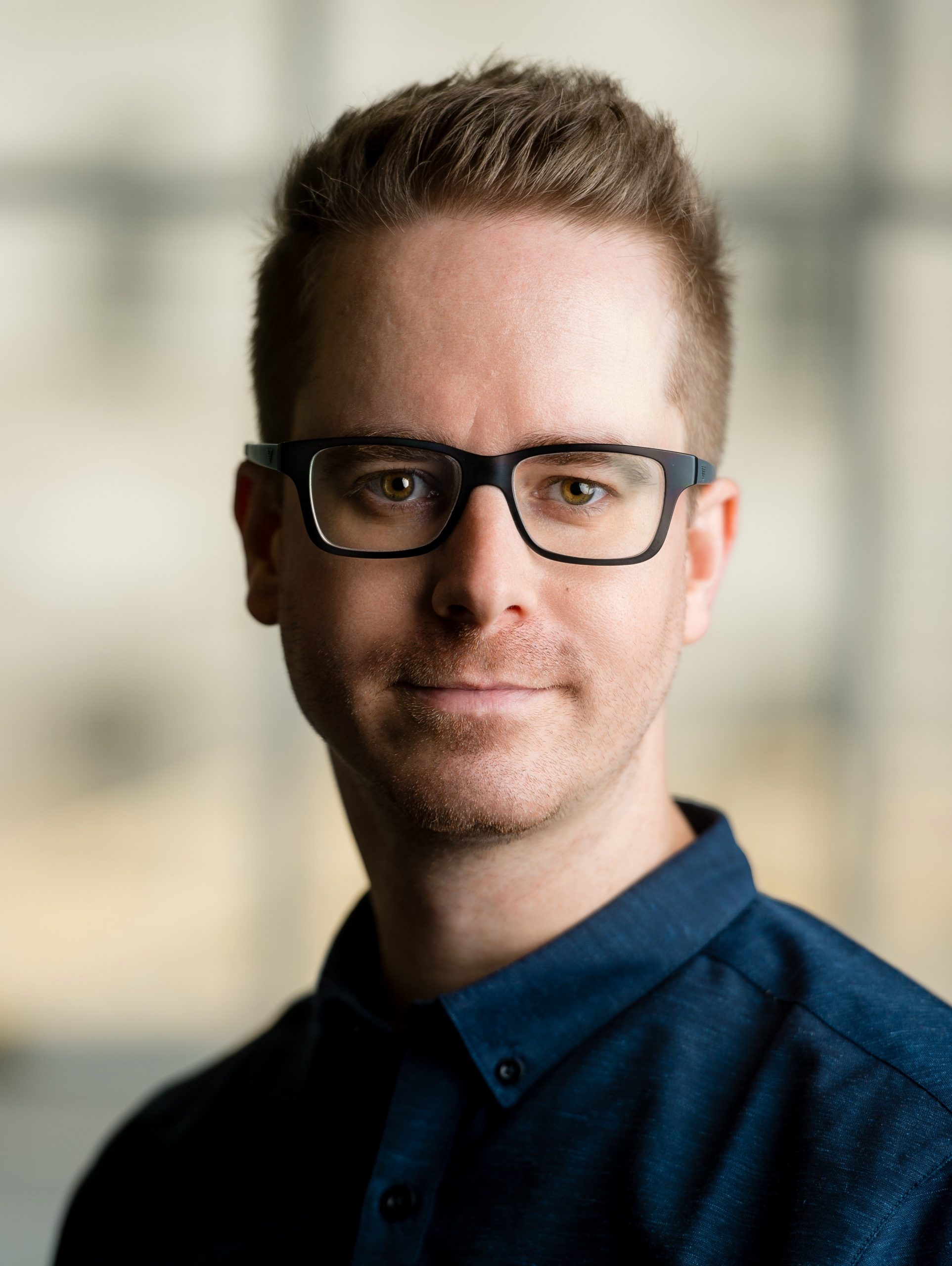
Ian Buchanan

Ian Buchanan is an Australian scholar and independent researcher whose work focuses on critical theory, cultural studies, and contemporary continental philosophy. He was formerly Professor of Critical Theory and Cultural Studies at the University of Wollongong. His research and publications have made significant contributions to the study of Michel de Certeau, Gilles Deleuze, Félix Guattari, and Fredric Jameson. He is the author of several influential books, including Michel de Certeau: Cultural Theorist (SAGE, 2000), Deleuze: A Metacommentary (Edinburgh University Press, 2000)

James J. Chriss

James J. Chriss is Professor of Sociology in the Department of Sociology and Criminology at Cleveland State University. His primary areas of research and scholarly interest include social control, policing, law and society, sociological theory, and criminological theory. His work engages both classical and contemporary theoretical perspectives, with particular attention to the role of social control in modern societies and its implications for law, governance, and policing [...]

Colby Dickinson

Colby Dickinson is Professor of Theology at Loyola University Chicago. His primary interests are continental philosophy in relation to theology, philosophy of religion, phenomenology and theology, atheism and secularism, and political theology. He is the author of Giorgio Agamben’s Homo Sacer Series: A Critical Introduction and Guide, Haunted Words, Haunted Selves: Listening to the Otherness within Western Thought, Atheism and Love in the Modern Era: Practicing [...]

Alessandro Ferrara

Alessandro Ferrara is Professor Emeritus of Political Philosophy at the University of Rome Tor Vergata and Adjunct Professor of Legal Theory at Luiss Guido Carli University in Rome. In 2025 he has been Spender Visiting Professor at the Law School of the University of Sydney. He has served as President of the Italian Society for Political Philosophy (2005-2010) and since 1993 is a Co-Director of the Prague Conference Philosophy and Social Science. ...

Robert Hassan

Robert Hassan is Professor of Media and Communication in the School of Culture and Communication at the University of Melbourne. He has taught, researched, and written for over two decades at the intersection of politics, media, technology, temporality, and the philosophy of science. Since joining the University of Melbourne in 2011, he has played a central role in teaching across BA, MA, and PhD programs, served as Head of Media and Communication from 2014 to 2018, and is currently Director of the Media and Communications MA program. Professor Hassan has authored twelve books and numerous scholarly essays exploring the political economy of media, digital technology, and the experience of time. His most recent works include Analog (MIT Press, 2022),
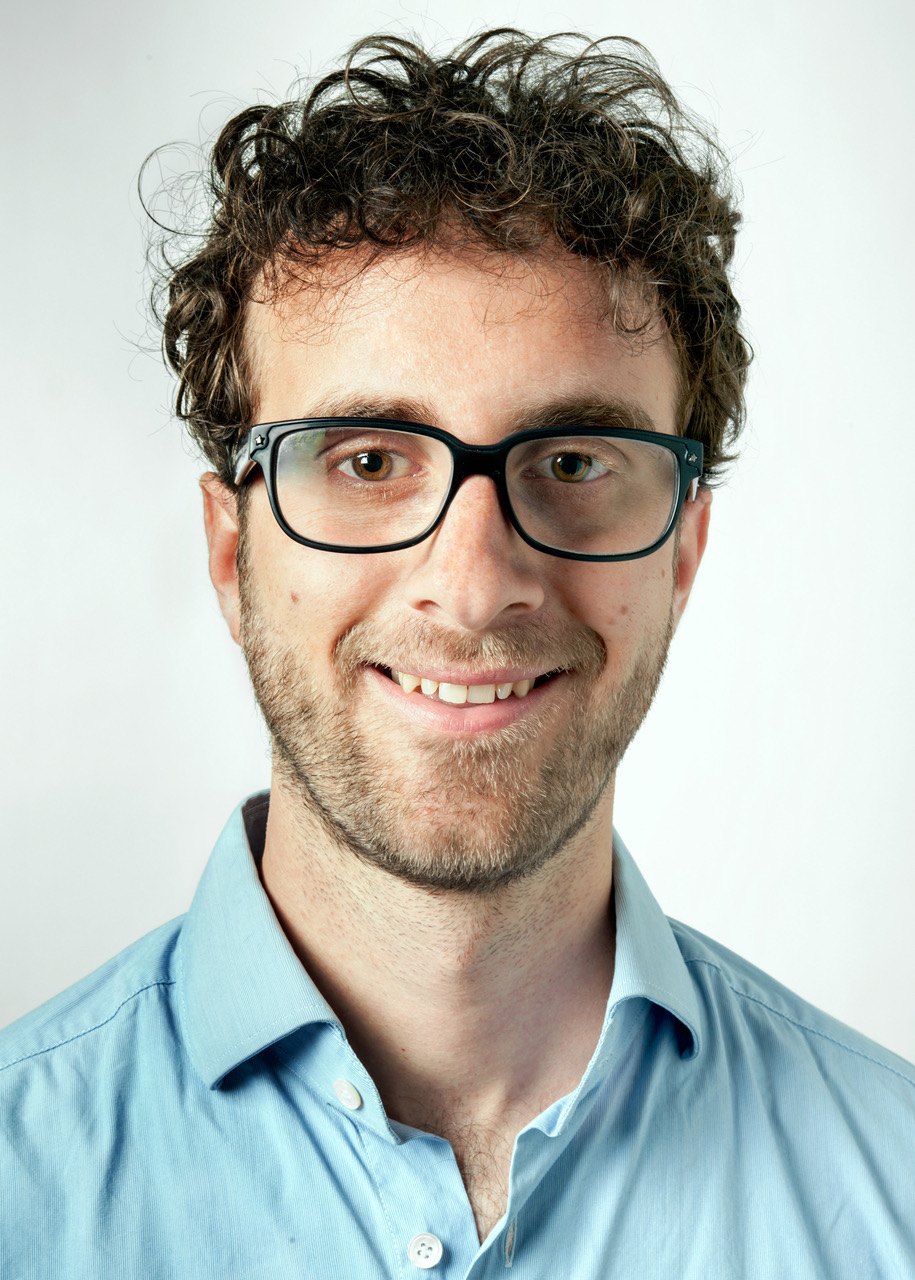
Barry M. Katz

Barry M. Katz is Emeritus Professor of Industrial and Interaction Design at the California College of the Arts and formerly Adjunct Professor of Mechanical Engineering at Stanford University and Lecturer at the Jacobs Institute for Design Innovation at U.C. Berkeley. As IDEO Fellow Barry worked for more than 20 years with the global design and innovation consultancy, and continues to consult with governments, companies, and academic institutions worldwide. His writings [...]

Alex Koutsogiannis

Alex Koutsogiannis holds a BA in sociology from Panteion University in Athens (Greece), and MA and DPhil degrees in social and political thought from Sussex University in the UK. He is currently an Associate Professor of Political Theory in the Department of Political Science at the University of Crete. His research and publications focus on the critical theory of the Frankfurt School, theories of democracy and the state, and the political theory of the Athenian Polis. ...

Stefano Petrucciani

Stefano Petrucciani is Honorary Professor of Political Philosophy at the University of Rome “La Sapienza.” He previously served as President of the Italian Association for Political Philosophy. He is the author of numerous books, including The Ideas of Karl Marx (Palgrave, 2020), Theodor W. Adorno’s Philosophy, Society and Aesthetics (Palgrave, 2021), Pensare con Marx (Carocci, Rome, 2022), and Marx en 10 palabras (Alianza Editorial, 2023). He also edited a three-volume [...]

Roberta Sala

Roberta Sala is Full Professor of Political Philosophy at Vita-Salute San Raffaele University in Milan, where she teaches Political Philosophy, Public Ethics, and related courses. At the same university, she serves as Chair of the Bachelor’s Degree Programme in Philosophy, Director of the Centre for Studies in Ethics and Politics (CeSEP), and a member of the Board of Directors of the GENDER Centre. She has held leadership roles in major scholarly associations, including Vice-President [...]

Peter J. Verovšek

Peter J. Verovšek is Senior Assistant Professor in the History and Theory of European Integration at the University of Groningen in the Netherlands. He is the author of Jürgen Habermas: Public Intellectual and Engaged Critical Theorist (Columbia University Press, 2026) and Memory and the Future of Europe: Rupture and Integration in the Wake of Total War (Manchester University Press, 2020). He has published widely on issues in social and political theory, the history of twentieth century political thought, collective memory studies and European integration.